Philosophy

Advaita Vedanta: the philosophy of the one Self

The tradition that the Govardhana Peetha exists to preserve rests on a single, radical insight: that the awareness you are is not separate from the reality of everything. What follows is an introduction to its key ideas, with Sanskrit terms explained in plain language.

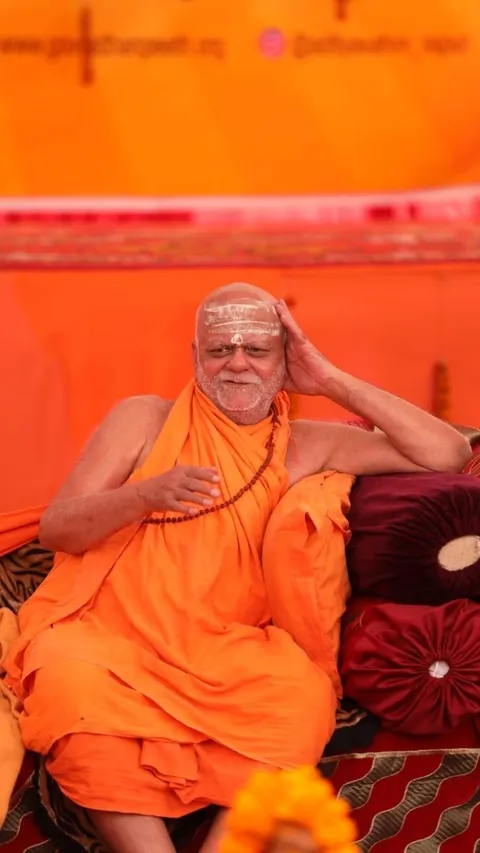
Nishchalananda Saraswati seated on cushions in saffron robes, one hand resting against his head in a reflective posture
Iअद्वैत वेदान्त

Advaita Vedanta

“Non-dual Vedanta” — the teaching that reality is one.

Vedānta means “the end of the Veda” — both the concluding portion of the Vedic literature, the Upaniṣads, and its culminating purpose. Advaita means “not-two”. Advaita Vedanta is the school of interpretation, given its classical form by Adi Shankaracharya, which reads the Upaniṣads as teaching one thing above all: that the individual Self and the ultimate reality are not different.

The school rests on three canonical sources, known together as the Prasthānatrayī (“the three points of departure”): the Upaniṣads, the Bhagavad Gītā and the Brahma Sūtras of Bādarāyaṇa. Shankara’s commentaries on all three remain the reference point for the tradition, and every Shankaracharya is expected to teach from them.

To reconcile the plain experience of a varied world with the claim that reality is one, Advaita distinguishes levels of reality. There is the absolute (pāramārthika) level, at which only Brahman is real; the empirical (vyāvahārika) level of everyday life, in which the world and its rules are fully valid for practical purposes; and the apparent (prātibhāsika) level of dreams and illusions. The classic illustration is a rope mistaken for a snake at dusk: the snake is not nothing — it frightens — yet it was never anything but the rope.
IIब्रह्म

Brahman

The infinite reality — existence, consciousness, fullness.

Brahman is the Upaniṣadic name for the ultimate reality: that from which the universe arises, by which it is sustained, and into which it resolves. The Taittirīya Upaniṣad (2.1.1) defines it in three words: satyaṃ jñānam anantaṃ brahma — “Brahman is reality, knowledge, infinity.” Later Vedanta summarises the same insight as sat-cit-ānanda: existence, consciousness and fullness.

Advaita distinguishes Brahman considered in itself — nirguṇa, “without attributes”, beyond every description — from Brahman as related to the world — saguṇa, “with attributes”, the Lord (Īśvara) who is the creator, sustainer and object of devotion. The two are not two realities but one reality viewed from two standpoints. This is why devotion and worship have a real and honoured place in the Shankara tradition, as the temple of Jagannatha at the heart of Puri attests.

IIIआत्मा

Ātman

The Self — the witness of all experience.

Ātman is the Self: not the body, nor the mind, nor the personality, but the awareness in which body, mind and personality are known. Vedanta calls it the witness (sākṣī). Thoughts come and go; the awareness of their coming and going does not.

The Upaniṣads lead the student to the Self by two classic methods. The first analyses the three states of experience — waking, dreaming and deep sleep — and points to the consciousness present throughout all three, which the Māṇḍūkya Upaniṣad calls simply “the fourth” (turīya). The second, from the Taittirīya Upaniṣad, peels away five “sheaths” (kośas) — body, vital energy, mind, intellect and bliss — to show that the Self is none of the layers that seem to cover it.

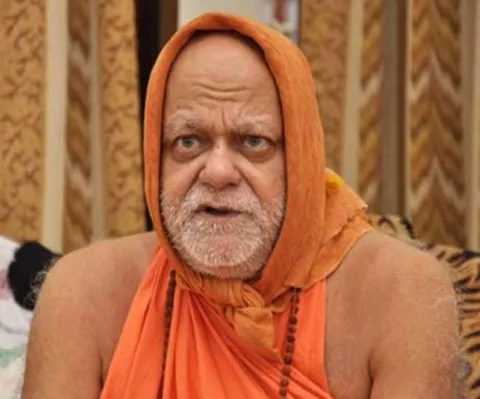
Close portrait of Nishchalananda Saraswati, his head covered by a saffron cloth, gazing thoughtfully
Stillness is the traditional posture of inquiry.

The central claim of Advaita is that this Self is identical with Brahman. The consciousness that witnesses one person’s experience is not a fragment of the infinite; it is the infinite, appearing as limited because of its association with a particular body and mind — as the space inside a pot seems separate from the sky until the pot is broken.

The Four Mahāvākyas

Four great statements, four cardinal seats

Each cardinal maṭha of the Shankara tradition is entrusted with one Veda and one “great statement” drawn from its Upaniṣads. All four express the same identity of Self and Brahman.

प्रज्ञानं ब्रह्मPrajñānaṃ Brahma

“Consciousness is Brahman.” The nature of reality is the very awareness by which everything is known.

Aitareya Up. 3.3 · Ṛgveda · Puri
अहं ब्रह्मास्मिAhaṃ Brahmāsmi

“I am Brahman.” The statement of realisation, spoken in the first person.

Bṛhadāraṇyaka Up. 1.4.10 · Yajurveda · Sringeri
तत्त्वमसिTat Tvam Asi

“That thou art.” The teacher’s instruction to the student, repeated by Uddālaka to his son Śvetaketu.

Chāndogya Up. 6.8.7 · Sāmaveda · Dwarka
अयमात्मा ब्रह्मAyam Ātmā Brahma

“This Self is Brahman.” The statement of contemplation, pointing to the Self here and now.

Māṇḍūkya Up. 2 · Atharvaveda · Jyotirmath
IVमाया

Māyā

How the one appears as many.

If reality is one, why do we experience multiplicity and separation? Advaita answers with the concept of māyā — the power by which the one Brahman appears as a world of names and forms. At the level of the individual, the same principle is called avidyā, ignorance: not a lack of information, but a basic misapprehension of who one is.

Shankara begins his commentary on the Brahma Sūtras with an analysis of adhyāsa, “superimposition” — the habitual confusion of the Self with the not-Self, so that we say “I am tired” or “I am old” of what is merely the body or mind. Māyā is described as anirvacanīya, “indefinable”: it cannot be called real, since it disappears with knowledge, nor unreal, since it is experienced. The world is therefore not dismissed as nothing; it is understood as an appearance (vivarta) of Brahman, as the snake is an appearance of the rope.

Vआत्मज्ञान

Self-knowledge

Jñāna — liberation comes through knowing, not doing.

Because bondage is rooted in ignorance, Advaita holds that only knowledge can remove it — just as only light, not effort, removes darkness. Ritual, ethical action and devotion are valuable because they prepare the mind, but they cannot by themselves produce the recognition of what one already is. That recognition is ātma-jñāna, Self-knowledge.

This knowledge is not mystical private experience in the modern sense. The tradition treats the Upaniṣads as a pramāṇa — a valid means of knowledge — for a matter no other means can reach, just as the eyes are the means for knowing colour. The words of scripture, unfolded by a competent teacher and understood by a prepared mind, reveal the Self directly.

VIमोक्ष

Mokṣa

Liberation — freedom as one’s own nature.

Mokṣa is freedom from saṃsāra, the cycle of birth, death and the sorrow born of misidentification. In Advaita, liberation is not a new state to be manufactured or a place to be reached; it is the recognition of the Self that was never bound. For that reason the tradition speaks of jīvanmukti, “liberation while living”: one who has understood continues to live and act, but without the sense of being a limited, separate doer.

Among the four aims of human life recognised by Indian tradition — dharma (right conduct), artha (prosperity), kāma (fulfilment) and mokṣa — liberation is regarded as the highest, the one that gives the other three their ultimate meaning.

VIIधर्म

Dharma

The order that sustains — and the discipline that prepares.

Dharma, from a root meaning “to hold” or “to sustain”, is the order that upholds individual and social life: duty, right conduct, and the ethical and ritual framework set out in the śāstras. Advaita does not set dharma aside. Rather, it gives it a precise role: action performed as duty and offered without selfish attachment — the karma-yoga of the Bhagavad Gītā — purifies the mind (citta-śuddhi) and makes it fit for Self-knowledge.

This is why the Shankaracharyas have always been custodians of dharma as well as teachers of non-duality. The present Shankaracharya’s extensive writing on nīti — ethics and statecraft — and on the principles of Sanatana Dharma stands in this line. See Teachings for the themes he develops.

VIIIविचार

Vedantic inquiry

Hearing, reflecting, contemplating.

The Bṛhadāraṇyaka Upaniṣad (2.4.5) instructs that the Self is “to be heard of, reflected upon and meditated upon”. The tradition takes this as a three-stage method of inquiry (vicāra):

  • ŚravaṇaHearing — systematic study of the scriptures under a teacher, to understand what they actually teach.
  • MananaReflection — reasoning through doubts and objections until the teaching is intellectually secure.
  • NididhyāsanaContemplation — dwelling on the truth understood until contrary habits of thought dissolve.
  • Guru–śiṣyaThe teacher–student relationship through which this method has been transmitted, generation after generation.
IXसाधना

Knowledge and spiritual practice

The fourfold qualification of the seeker.

If knowledge liberates, what is the place of practice? Shankara’s answer is that practice makes the knower ready. Classical Advaita describes a fourfold qualification (sādhana-catuṣṭaya) that a student should cultivate before and during inquiry:

  • VivekaDiscrimination between the eternal and the transient.
  • VairāgyaDispassion towards the passing rewards of this world and beyond.
  • Ṣaṭ-sampattiSix virtues: calm, self-restraint, withdrawal, forbearance, faith and concentration.
  • MumukṣutvaAn intense desire for freedom.

Seen this way, the whole life of a maṭha — its disciplines, study, worship and service — is a school for this preparation, and its teacher is one who has walked the path. Continue to Tradition & Lineage to see how this teaching has been carried from teacher to teacher.